


Find ad creatives before saturation
Discover what competitors are running now so you can launch angles earlier.
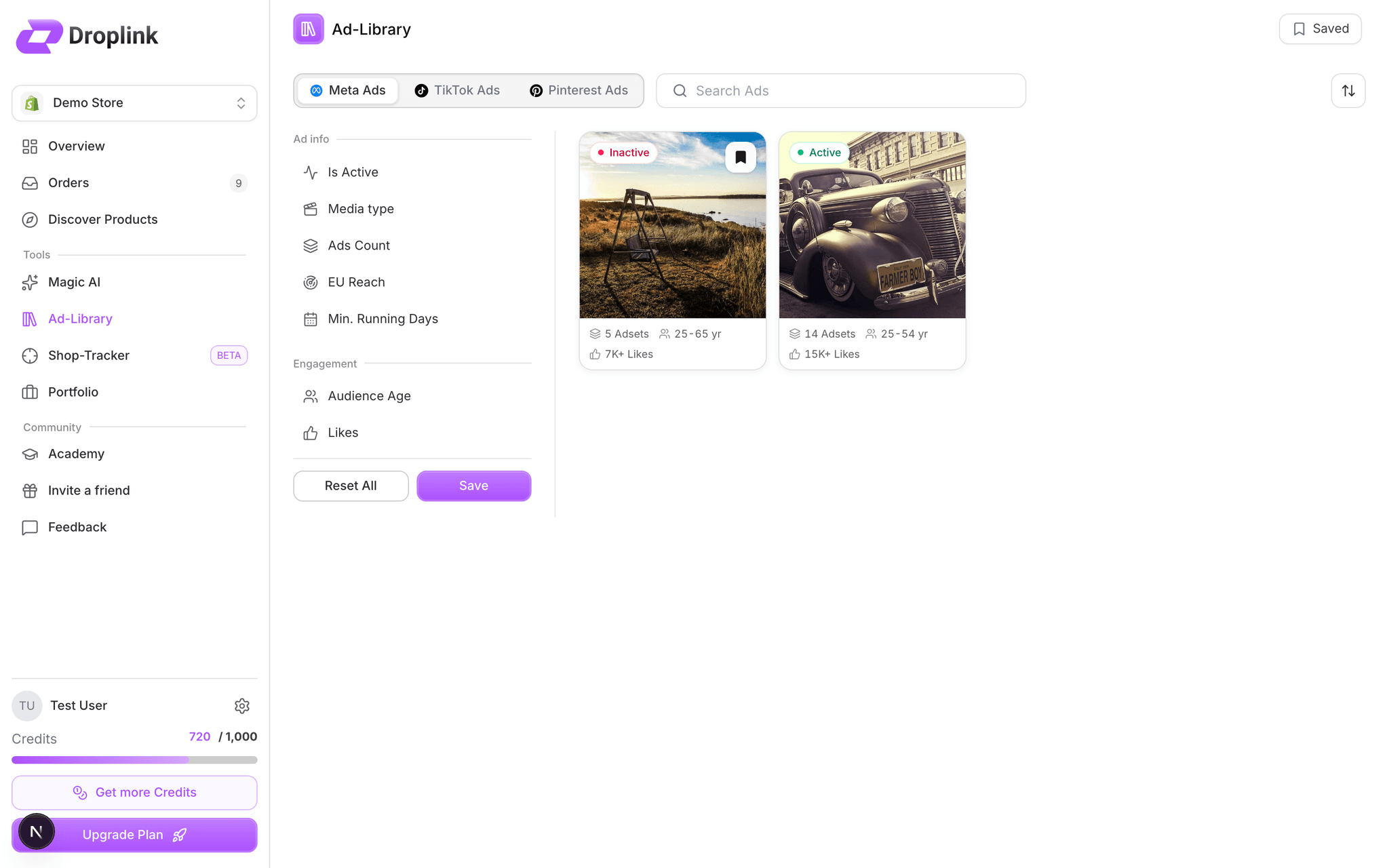
See which ads are live right now across Meta, TikTok and Pinterest, how long each one has been running, and which product it sends people to. Then decide what is actually worth testing.
Discover what competitors are running now so you can launch angles earlier.
Sort by growth to spot ads picking up traction and products likely to trend next.
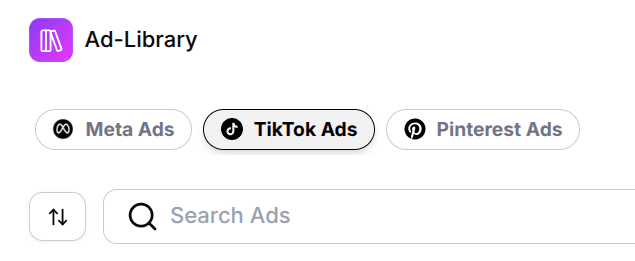
Use filters to isolate profitable patterns faster across TikTok, Meta, and more.
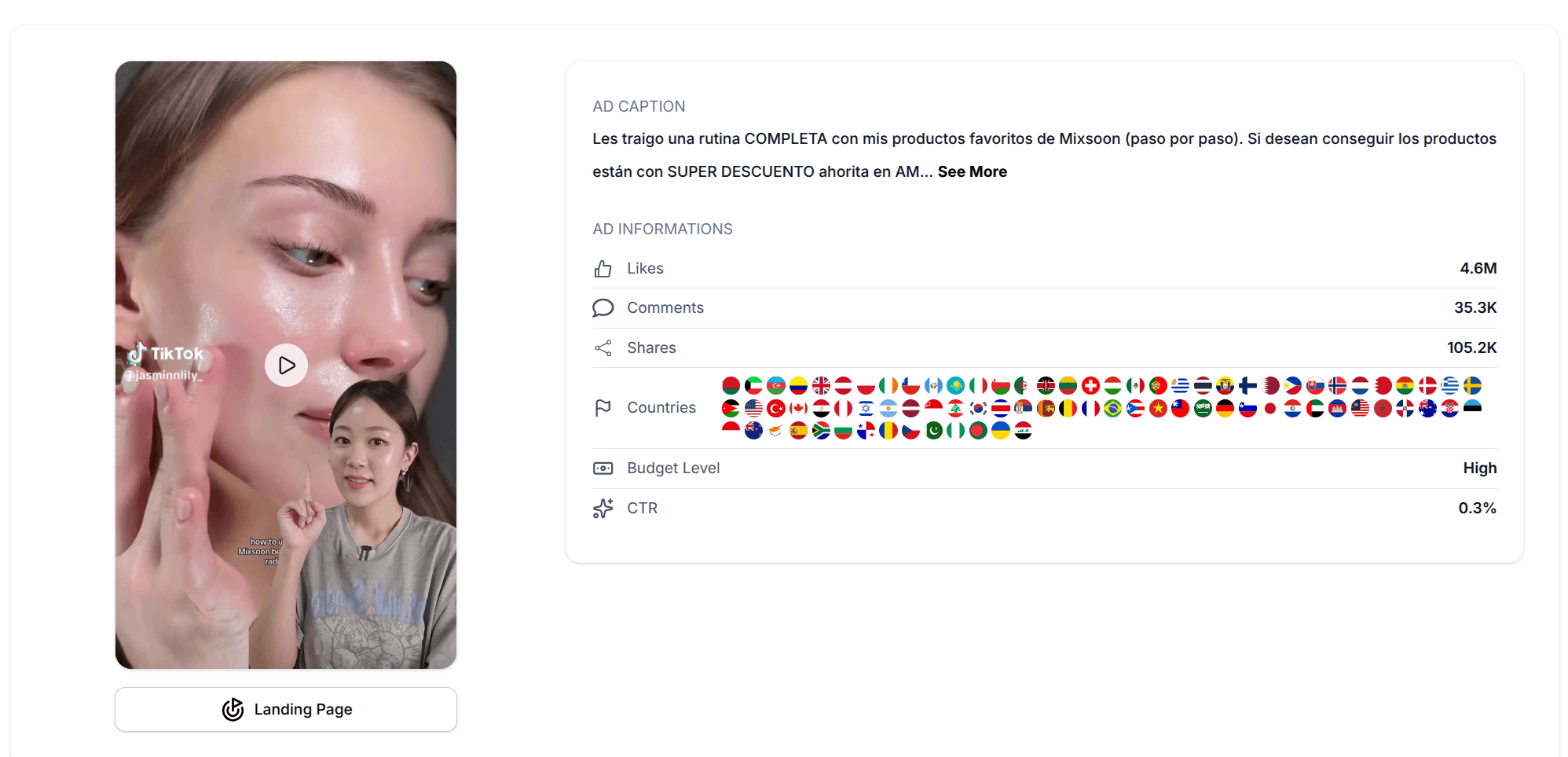
Cross-check comments and performance signals before committing spend.
Discover Ads helps your team turn noisy market data into sharper creative decisions and faster validation.
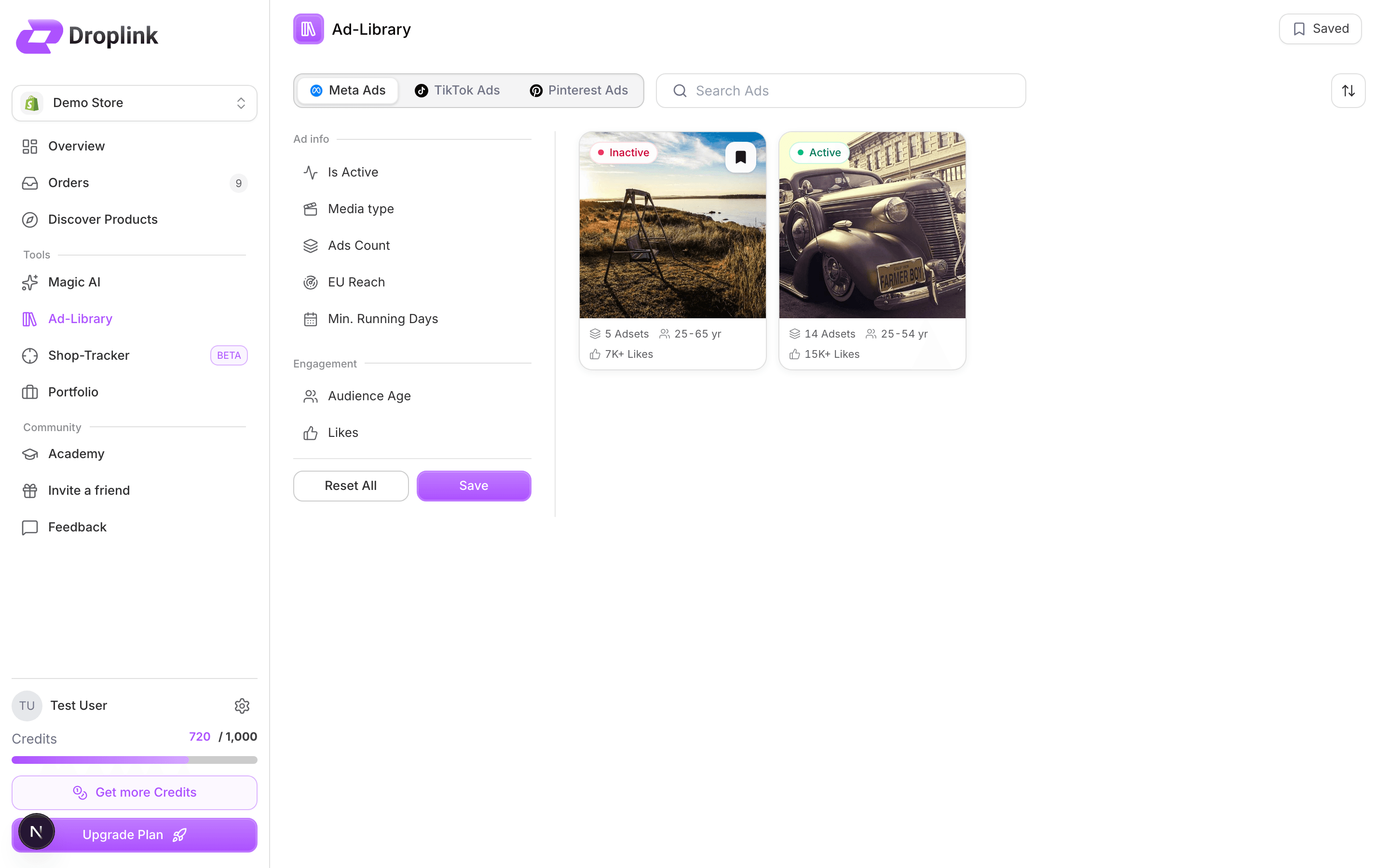
Most people open an ad library, sort by likes and start scrolling. Likes only tell you what already happened. Run time tells you what is happening right now: an ad that is still live weeks after it launched is an ad somebody keeps paying for, every single day, and almost nobody keeps paying for a creative that loses money.
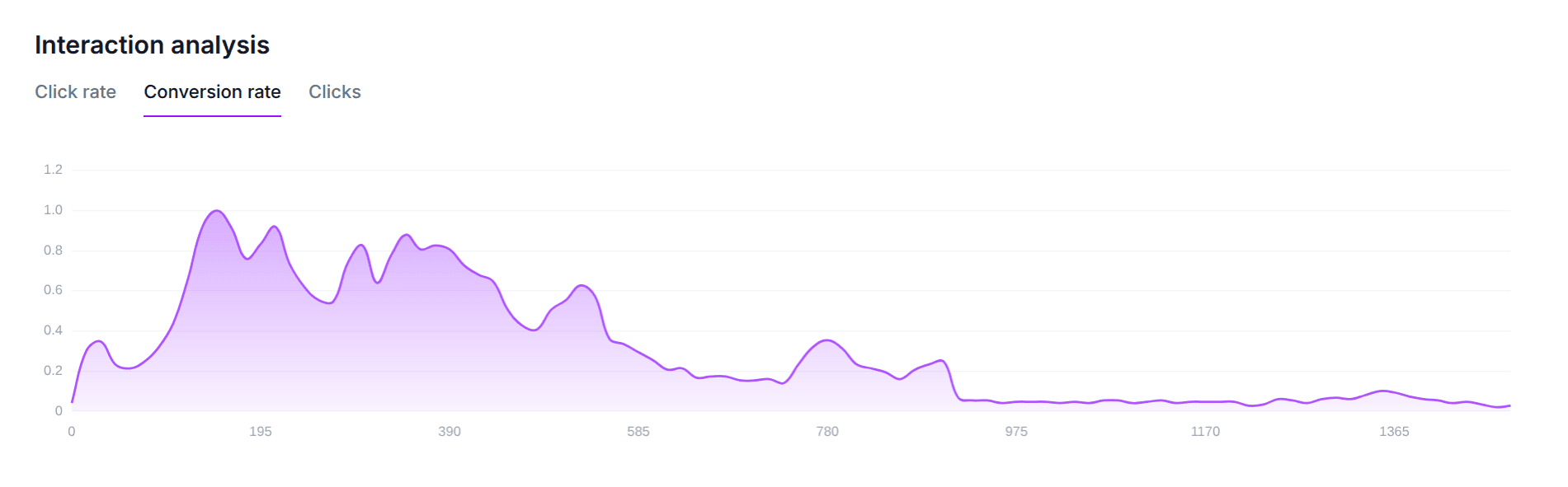
So let your first pass be boring. Filter down to the platform and the niche you actually sell in, then look at the ads running longest rather than the ones shouting loudest. Engagement is the second layer, and its shape matters more than its total: an ad picking up comments this week is in a different phase than one that went quiet after launch.
A long run time cuts both ways, though. It proves the offer works; it does not promise the slot is still open. One advertiser running the same creative for weeks is a confirmed angle. Twenty advertisers running it for weeks is a crowded auction, and you would be walking into it as the newest and least experienced bidder in the room.
The ad is the entrance, not the decision. Before you save anything to a swipe file, follow it through to the product and look at the page a real buyer lands on: what is being sold, at what price, what is bundled in, and how much of the persuading the page does compared with the video.
Then do the arithmetic, because it flips the answer more often than the creative does. If the landing page sells at $49 and you can land the same item for $14 including shipping, you have $35 per order for advertising, fees and everything else. If another store sells it at $24, that gap is $10. Same creative, two different businesses.
Take the angle, not the file. Write down the promise the ad makes in its first seconds, who it speaks to, and whether it demonstrates the product or only claims something about it. That part transfers to footage of your own. Re-uploading someone else's video hands you their weakest asset and material you do not own.
A promising find can still be a trap, and the tells show up before you have spent anything: engagement wildly out of proportion to the store behind it, a comment section arguing about delivery, a link that lands on a generic marketplace listing instead of a built product page. Each of those measures attention rather than a working business.
Checking across platforms costs a minute and settles a lot. When the same product is being advertised on Meta, TikTok and Pinterest at once, the demand is unlikely to be one algorithm's mood. When something exists loudly on exactly one platform and nowhere else, you may be looking at a format that works rather than a product that sells.
The mistake that costs the most is treating one good-looking ad as a market. Before you release budget, go looking for the second and third advertiser and check how long each has been at it. If the product turns up once, you found somebody's experiment. If it turns up everywhere with old start dates, you found a market that no longer needs you.
An ad library is a searchable record of the ads advertisers are currently running on a platform. Droplink Discover Ads brings Meta, TikTok and Pinterest into one search, so you can see which creatives are live, how long each has been running, the engagement it collected and which product it points to. Plenty of product research starts here, because a running ad is somebody spending real money.
The native libraries each cover one platform and are built for transparency rather than research. You end up with three tabs open, nothing you can compare side by side, and no direct line from a creative to the product behind it. Discover Ads keeps the three together, adds filters for niche, platform and format, and lets you sort by momentum so ads gaining traction surface instead of old winners.
No, and assuming it does gets expensive. Engagement measures how many people stopped scrolling, and a joke, a shocking moment or an absurdly low price all buy that without a single order behind it. Read it together with run time and with whatever happens after the click. A modest ad live for weeks tells you more than a viral one switched off a month ago.
Looking at ads that are shown publicly is ordinary market research, and the platforms publish their own ad libraries precisely because ads are public. Reusing someone's footage, images or written copy is a different question, since that material belongs to whoever made it. Study the structure, the promise and the audience, then produce your own version.
Find proven creatives faster, validate angles with stronger signals, and launch ad tests with more confidence.

Stay one step ahead of your competition!
Free Tools
Resources
© 2026 Droplink
drop-link.io