

Best TikTok Agency Ad Account Providers: How to Evaluate and Choose One
Agency ad accounts are sold as a shortcut to scale, but the provider you pick decides whether your account survives its first policy review.
 Adeel Q·October 1, 2025·6 min read
Key Takeaways
- An agency ad account changes who controls your access, not how well your ads perform.
- Ask who owns the Business Center and who can revoke your access before you pay anything.
- Most account trouble starts on the landing page and in the product claim, not in the ad manager.
- Test a provider with a small, boring campaign before you move real budget across.
Introduction
If you are comparing TikTok agency ad account providers, you usually want one of two things: more stability than self-serve gives you, or a way back after a restriction.
No public ranking stays accurate for long. Providers change terms, get resold and disappear, and last quarter's recommendation may not be the same operation today.
The checklist is what stays stable. The questions separating a serious partner from a reseller with a landing page are the same every year.
This guide covers what an agency account really changes, how the model works, what to ask before you pay, and how to test a provider safely.
What a TikTok Agency Ad Account Actually Is
An agency ad account sits inside a partner's business structure instead of yours. You get working access, but the account belongs to them.
That puts someone between you and the platform. Support requests, policy questions and payments run through the partner rather than going to TikTok directly.
It is an access arrangement, not a hidden feature. It changes who holds the keys, not how your ads are reviewed.
That matters more than most sales pages admit. An agency account will not make weak creative perform, and it cannot make a non-compliant offer compliant.
Who Actually Needs One
Most beginners do not need one. If your self-serve account runs without restrictions and you are still hunting a first winner, a middleman adds cost and dependency.
It starts to make sense when a single restriction would stop real revenue, or when you run several stores and want them cleanly separated.
It also helps when you need a human to escalate to. A general support queue is tolerable at small budgets and painful when one campaign carries the month.
If your reason is that your own account keeps getting restricted, look at the ads first. The same creative on a new account usually ends the same way.
How the Provider Model Works
Behind most providers is a chain. A partner higher up holds the platform relationship, and the company selling to you sits a step or two below.
Your access usually arrives as a role inside a Business Center the provider controls. You build campaigns and read reporting; the ownership layer above stays theirs.
Funding works differently too. Ask exactly how top-ups reach the account, what happens to unused balance, and whether you can withdraw it at all.
None of this is bad in itself. It becomes a problem when the chain is longer than admitted, because every extra link slows support and blurs responsibility.
The Questions to Ask Before You Pay
Start with ownership. Ask who holds the Business Center, who can remove your access, and what happens to your campaigns, pixel and creative if you leave.
Then billing. Ask what is charged on top of your spend, how refunds work, what the invoice says, and which legal entity issues it.
Ask about support in specifics: who your contact is, in which channel, during which hours, and what an escalation looks like on a weekend.
Ask for references you can verify, meaning advertisers at comparable budgets in a comparable niche. A provider who cannot name one current client has already answered.
Write the answers down. If the same question gets a different answer two weeks later, that inconsistency is your result.
Red Flags in Provider Offers
The clearest red flag is a promise about policy. Nobody outside the platform can guarantee approvals, guarantee your account stays open, or guarantee that a ban is reversible.
Pressure is the second. Limited slots, a price expiring tonight and a push toward a large first deposit describe a business that needs your money more than your retention.
Vagueness about the entity is the third. If you cannot establish which company you are contracting with, and where, you cannot enforce anything later.
Be careful with providers openly courting advertisers who run products the platform does not allow. Their risk tolerance becomes yours.
Treat chat-only agreements as no agreement. Terms that live in a messaging thread change exactly when they start to matter.
Creative and Landing Page Readiness
Most account trouble does not begin in the ad manager. It begins with a claim in the first seconds of a video, or a landing page that overpromises.
Before moving accounts, run your own pre-launch review. Read the hook, the on-screen text, the product page and the checkout for anything you could not defend.
Health, income and appearance claims deserve the most attention, along with before-and-after visuals.
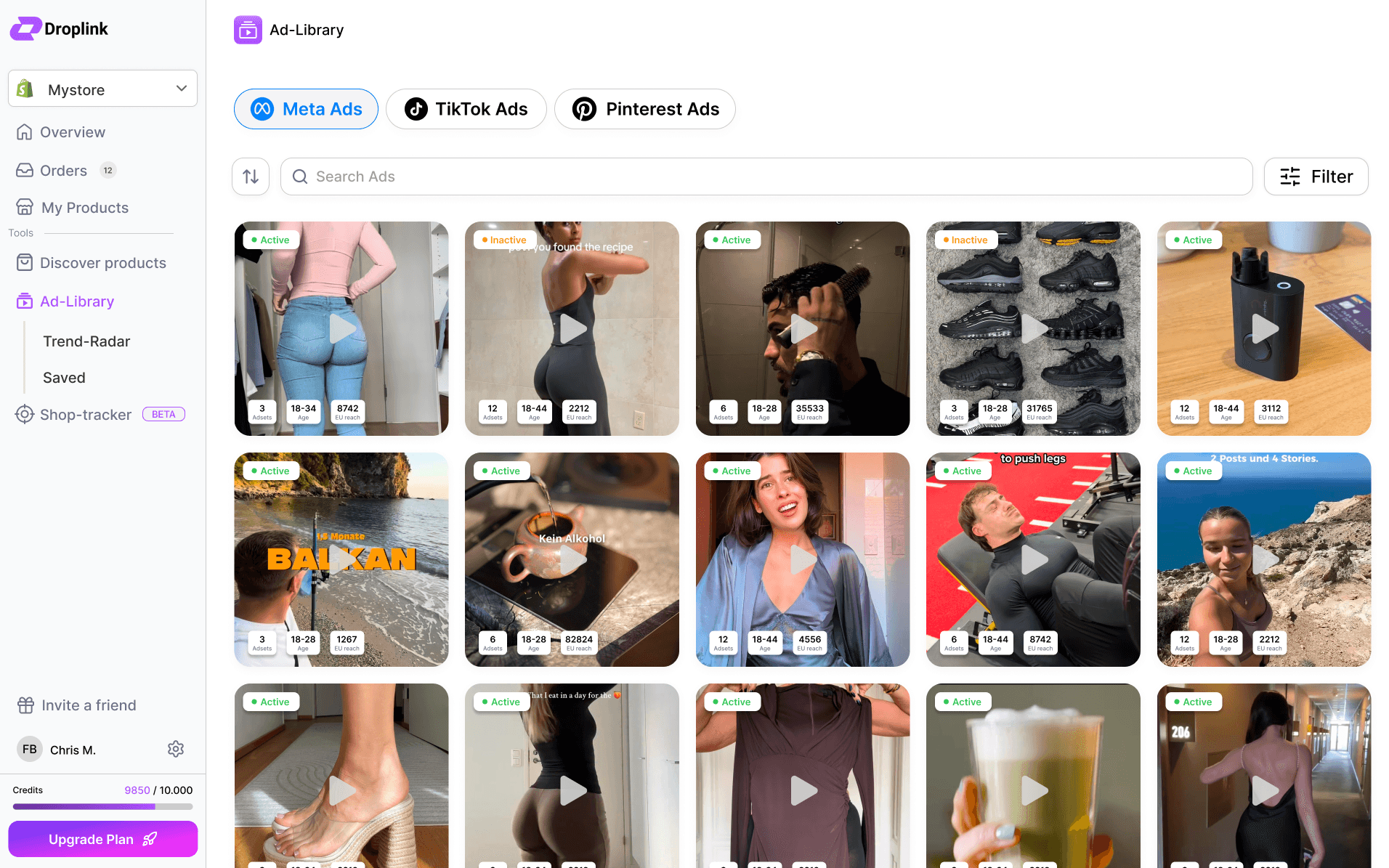
It also helps to see what is already running in your niche. Ad research tools such as Droplink show live ads and the stores behind them, which beats guessing.
Make the store look like a real business: reachable contact details, visible shipping and refund terms, a product page matching the ad.
How to Test a Provider With Low Risk
Treat the first weeks as a test, not a migration. Fund the smallest amount allowed and keep your existing account running in parallel.
Launch something deliberately boring: a proven product, creative already approved elsewhere, a modest daily budget. You are testing the provider, not the offer.
Measure what you are paying for. How fast does support reply, how quickly does a top-up become usable balance, and does anyone explain a rejection?
Create one small support case on purpose in the first week. How that is handled predicts how the serious case will go.
Keep your own copies of everything: creative files, audience notes and performance numbers. A provider's dashboard should not be your only record.
Scaling Without Destabilizing the Account
A new account has no history with the platform, and history is part of what a review considers. Ramp up in steps.
Keep testing separate from scaling. Unproven creative belongs in its own campaigns so a rejection does not land inside the campaign carrying your revenue.
Give tracking time as well. Let the pixel record real conversions before judging performance, or you will read normal early noise as a provider problem.
Keep a working fallback. A second account, self-serve or with another provider, turns a restriction into a lost day instead of a lost month.
Common Mistakes That Cost the Most
The most expensive mistake is a large deposit with a provider you have not tested. Money in someone else's balance is hard to recover.
The second is closing your own account once the agency one works. Redundancy is the whole point, and giving it up removes what saves you later.
The third is treating an agency account as permission to run creative you know is over the line. That ends the relationship, not just the campaign.
The last is never asking who owns what, then learning at the worst moment that the account, pixel and audiences were never yours. Ask that first.